
Z-Wave Alliance Chairman Avi Rosenthal shares insights from electronica 2026, exploring industrial IoT connectivity challenges and new opportunities for Z-Wave Long Range beyond the smart home.
With more than 86,000 visitors from 107 countries and 3,512 exhibitors representing 60 countries and regions, electronica brought together an impressive cross-section of the global electronics,
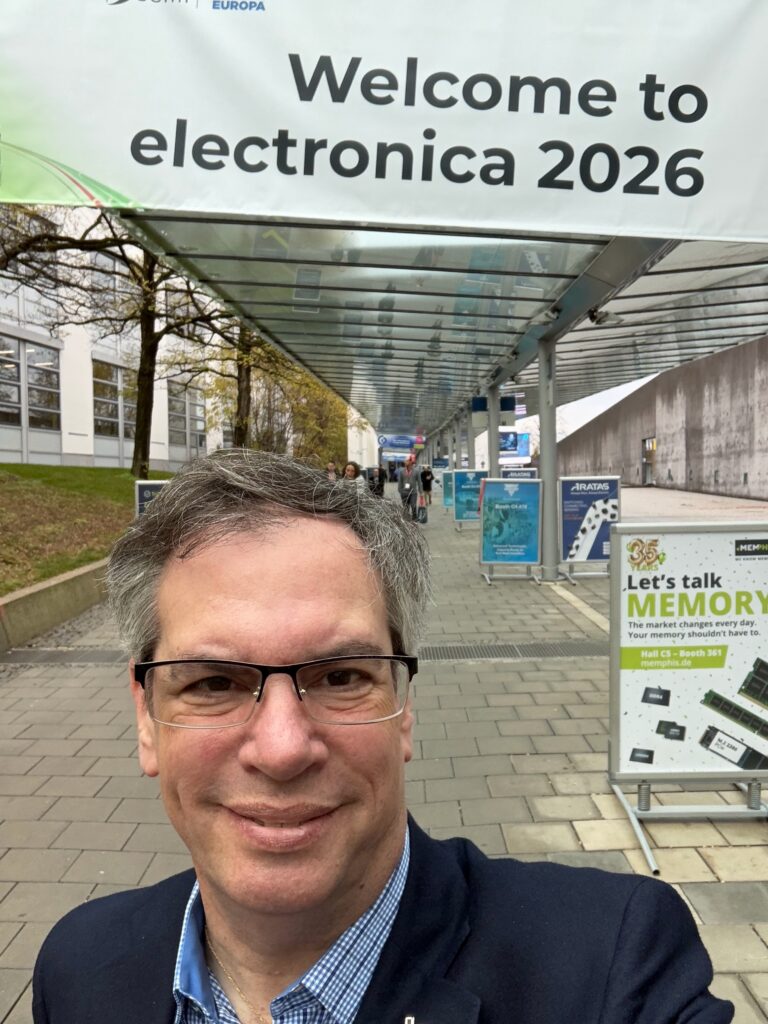
engineering, and manufacturing community. For me, attending the event was an opportunity to connect with industry professionals, better understand industrial IoT challenges, and explore how Z-Wave Long Range can address wireless connectivity needs beyond the smart home.
Exploring New Opportunities for Z-Wave Long Range
Walking the show floor, I was struck by the breadth of technologies represented, from semiconductor development and RF engineering to electronics design, manufacturing, and industrial applications. The event provided an opportunity to engage with audiences outside our traditional smart home ecosystem and introduce the strengths of Z-Wave to new industries.
Throughout the event, I had numerous conversations about the Z-Wave ecosystem, and particularly the potential of Z-Wave Long Range to address connectivity challenges in industrial environments.
One recurring topic was the need for reliable command and control communications in challenging, or “dirty,” RF environments. Industrial and manufacturing facilities often present significant wireless challenges, including interference, physical obstructions, and complex infrastructure.
Operating in the sub-GHz spectrum, Z-Wave Long Range offers direct hub-to-device communication, more than 1 mile of line-of-sight range, low power consumption, and support for thousands of devices on a single network. Combined with mandatory S2 security and a mature certification program, these capabilities make Z-Wave Long Range a compelling option for industrial sensing, monitoring, and command and control applications.
Listening, Learning, and Looking Ahead
One of the most valuable aspects of electronica was the opportunity to listen. I spent much of my time speaking with engineers, manufacturers, and technology developers to better understand their challenges and identify where Z-Wave could provide meaningful solutions.
These conversations reinforced an important point: expanding into new markets is not simply about introducing technology to a different audience. It is about understanding real-world problems and determining where that technology can deliver value.
The continued involvement of Alliance members along with a growing ecosystem of manufacturers and developers, further strengthens Z-Wave’s ability to support opportunities across residential, commercial, and industrial IoT markets.
I left Electronica with valuable insights, new connections, and an even stronger appreciation for the opportunities ahead. As industrial and commercial IoT applications continue to evolve, so does the need for secure, reliable, and scalable wireless connectivity.
I look forward to continuing these conversations and exploring how Z-Wave can help address the next generation of industrial IoT challenges.
To learn more about Z-Wave Long Range and opportunities to collaborate with the Z-Wave Alliance, visit www.z-wavealliance.org.