Gemns Battery-Free Leak Detector is a Turning Point for IoT Devices
Las Vegas, NV – January 5, 2026 – CES® 2026 North Hall Booth #8425 – WePower Technologies today announced that its Gemns™ battery-free Leak Detector has become the first product to enter precertification under the Z-Wave Alliance’s newly approved Wake on Event End Node (WOEEN) device class. The new WOOEN classification represents a major step forward for ultra-low-power and battery-free smart home solutions.
Developed within the Technical Working Group of the Z-Wave Alliance, the WOEEN device class is designed specifically to support devices that operate exclusively on Z-Wave Long Range (ZWLR). WOEEN is a device type for sensors that stay completely off and only wake when something important happens. A part of the Z-Wave® certification stack, 2025B with WOEEN is slated for full release on January 9. The WePower Gemns leak detector will then be able to be Z-Wave certified.
New Wake on Event Device Class Expands ZWLR Ecosystem
The WOEEN device class introduces official support for devices that operate and wake only when triggered by a specific event, rather than maintaining an always-on or periodically active connection.
The new WOEEN classification clears the path for a new generation of battery-free sensors and innovative products that take full advantage of ZWLR’s extended range and low-power capabilities. The Gemns leak detector demonstrates how this new device class can expand what is possible within the Z-Wave ecosystem. ZWLR was engineered to extend wireless coverage and device capacity for the IoT. Unlike Z-Wave classic, which uses a mesh of repeaters, ZWLR uses a star topology with direct hub-to-device links for greater reach and simplicity. Key technical benefits of ZWLR include:
- Extended Range: Up to ~1.5 miles (2.4 km) line-of-sight wireless range at full transmission power.
- High Node Capacity: Supports up to 4,000 devices on a single network (vs. 232 in classic Z-Wave) thanks to an expanded addressing space.
- Star Network Topology: Direct communication from the hub to each device (no repeaters or hopping needed), improving reliability and reducing latency.
- Optimized Power Management: Dynamic power control and efficient protocols enable longer battery life and make battery-free, energy-harvesting nodes viable.
- Interoperability & Security: Compatibility with existing Z-Wave mesh devices on the same network, plus mandatory SmartStart® provisioning and S2 encryption for robust security.
“The introduction of the Wake on Event End Node device type is a major step forward for the Z-Wave ecosystem. It’s not just a new technical classification; it’s a milestone that paves the way for a whole new category of ultra-low-power, battery-free devices,” said Avi Rosenthal, Chairman of the Board at the Z-Wave Alliance. “We’re thrilled to see member companies like WePower driving this innovation. Devices such as their leak detector demonstrate how Z-Wave Long Range can deliver extended reach and greater network scale without sacrificing interoperability or security. We anticipate that this advancement will broaden Z-Wave’s market impact, enabling new smart home and IoT applications that were previously impractical with battery-dependent sensors.”
WePower’s Gemns Leak Detector: First Battery-Free Sensor in the WOEEN Class
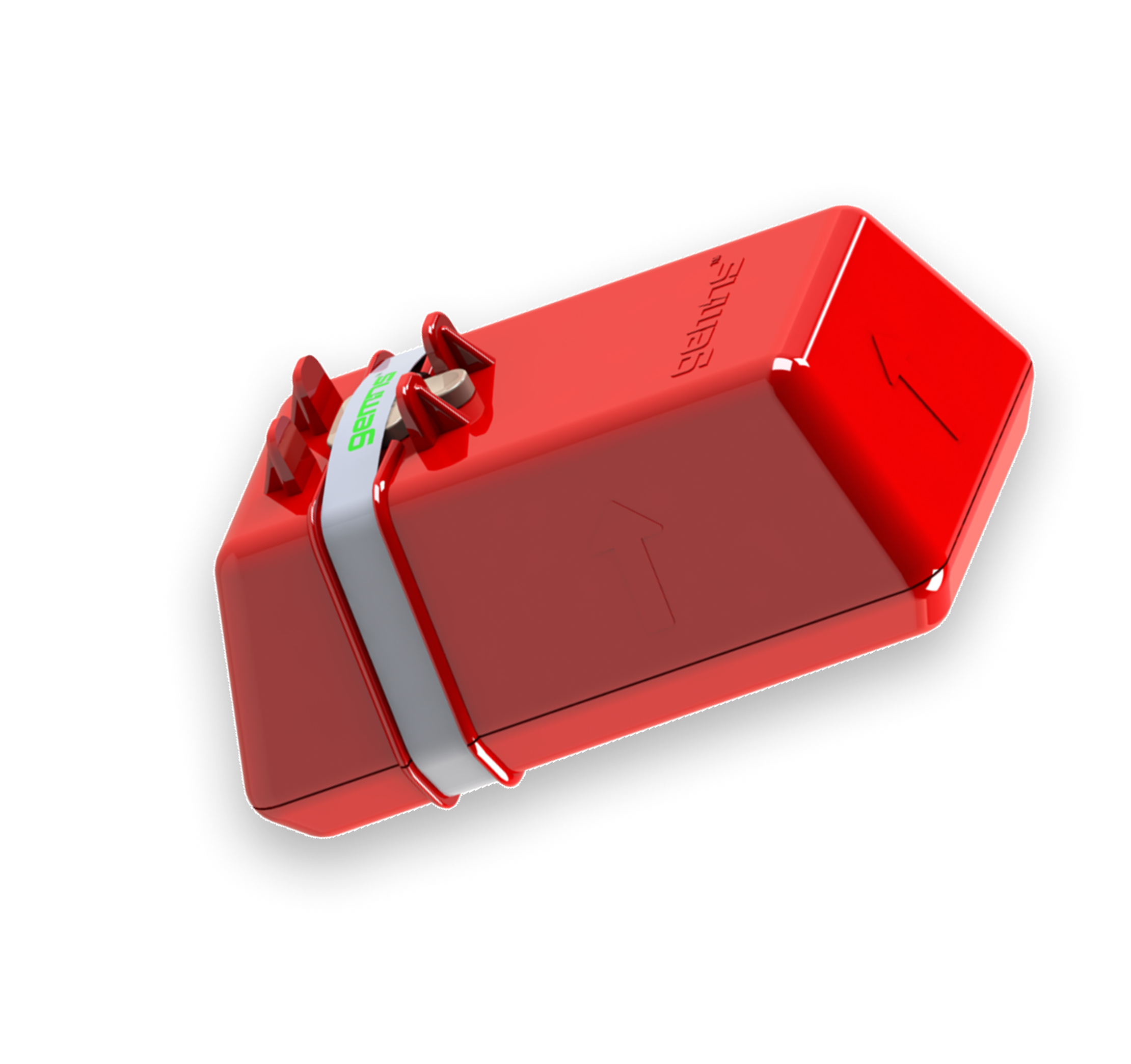
WePower’s Gemns leak detector is a battery-free sensor that harvests kinetic energy to send Z-Wave signals when a leak is detected. The device uses a patented electromagnetic energy-harvesting mechanism instead of a battery. Before deployment, a magnetic charger “winds up” an internal rotor in the sensor, storing energy in a tiny magnet-coil generator. When the sensor’s liquid-sensitive strip encounters water (or a specific target fluid), the stored energy is released as the rotor spins, generating a burst of power to boot the onboard microcontroller and instantly transmit a ZWLR alert. This innovative “wake on event” design means the leak detector remains fully dormant, with zero power drain, until a leak occurs, dramatically improving reliability and shelf-life compared to battery-based sensors. There is no need for routine battery changes or worrying about dead batteries compromising safety. After an event, the user simply replaces the inexpensive film strip and re-primes the device for continued protection.
The Gemns Leak Detector is poised to be the first product ever certified under the new WOEEN class, showcasing the possibilities of ZWLR for maintenance-free smart home devices. “Getting this new device category defined within the Z-Wave specification has been crucial for us,” said Larry Richenstein, Founder and CEO of WePower Technologies.
Richenstein continued, “Our team worked through the Z-Wave Alliance working groups to help drive the creation of the WOEEN class, because we knew sensors that are truly battery-free needed a pathway to certification. This collaborative effort is a prime example of how member participation can shape industry standards. We’re proud that the Gemns leak detector will be the first of its kind to hit the market. It not only validates the strength of our technology but also shows how innovation and standards development go together to bring better solutions to users.” Richenstein, a veteran of the wireless device industry, founded WePower in 2019 with the mission to “engineer reliable, scalable, sustainable energy harvesting solutions that power the IoT… eliminating wasteful batteries.” The upcoming certification of the leak detector realizes this mission by eliminating batteries from a critical smart home safety device.
Debut at CES 2026 – Booth 8425 (North Hall)
The WePower Gemns battery-free leak detector and its ZWLR technology will debut at CES 2026 in Las Vegas. CES participants can experience the demo in action at the company’s booth (#8425, North Hall) throughout the show. Executives from WePower will be on hand to answer questions about energy harvesting for IoT, and attendees can see first-hand how a maintenance-free, ZWLR sensor can help prevent water damage while contributing to a more sustainable, battery-free future.